One of the wisest beings in Norse mythology is Mimir (Old Norse: Mímir). His knowledge is tremendous, and it may even outstrip that of Odin. The name Mimir is related to the word for memory, which is a clear sign of his vast knowledge.
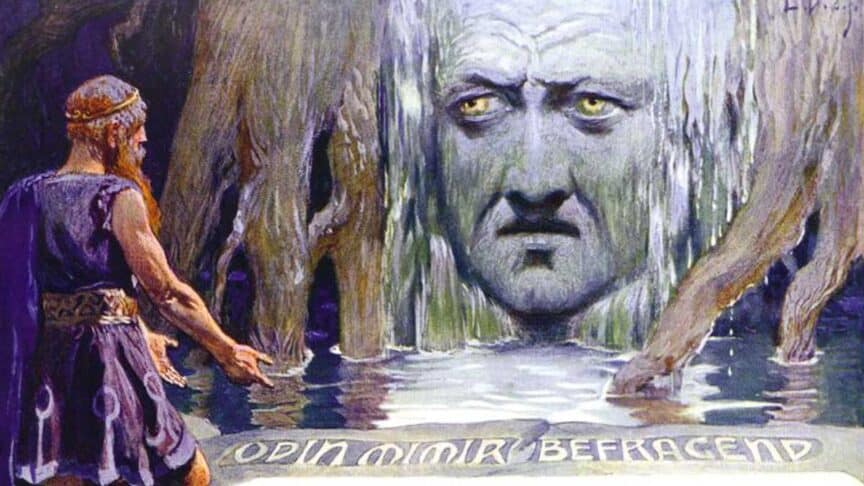
The sources tell two different stories about Mimir. In one, he is a living being who owns the well of wisdom. In the other, he is a severed head that Odin keeps and asks for advice.
Is Mimir Odin’s Uncle?
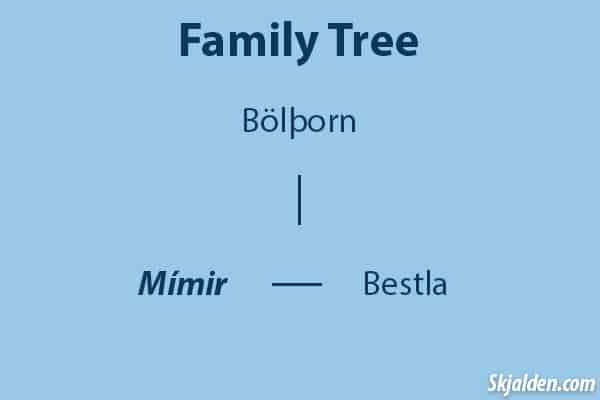
Maybe. In the poem Hávamál, Odin says he learned nine mighty songs from the famous son of the giant Bölþorn. Bölþorn is the father of Odin’s mother Bestla, so this son is Odin’s uncle on his mother’s side.
It is often said that this uncle is Mimir, but the poem never names him, and no other source says so. If the uncle is Mimir, then Mimir comes from a giant family, just like Bestla.
Why Was Mimir Beheaded?
Snorri Sturluson tells the story of Mimir’s head in Ynglinga saga. After the war between the Aesir and the Vanir, the two sides exchanged hostages to keep the peace. The Aesir sent Mimir and the god Hœnir.
The Vanir made Hœnir a chieftain, but he relied on Mimir’s advice in everything. When Mimir was not there, Hœnir only answered, “Let others decide.” The Vanir felt they had been cheated in the exchange, so they beheaded Mimir and sent his head to Odin.
Odin took the head and smeared it with herbs so that it would not rot. He sang magic charms over it, called galdrar in Old Norse, so that the head could speak. From then on, the head told Odin many hidden things. Odin had a lot of respect for Mimir, and he valued his counsel in his pursuit of more knowledge.
Mimir’s Well and Odin’s Eye
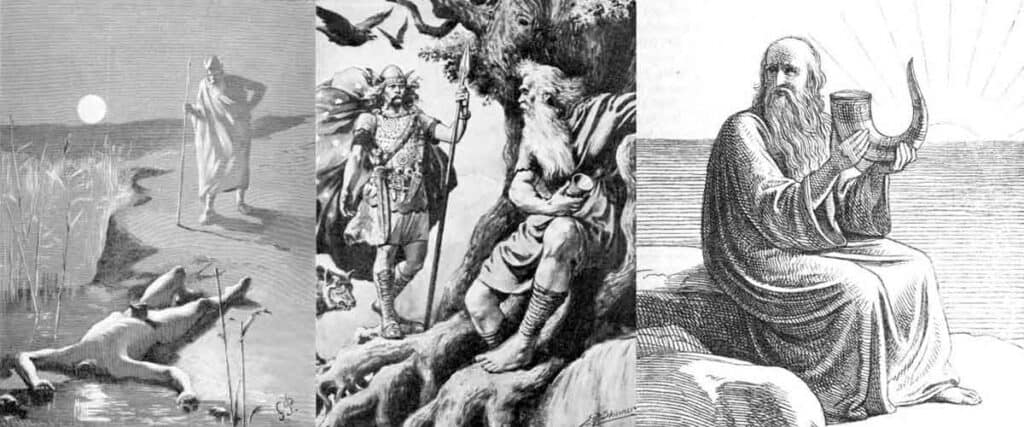
The other story is about Mimir’s well, Mímisbrunnr. Snorri places it under one of the roots of the world tree Yggdrasil, the root that reaches toward the frost giants. Wisdom and intelligence are hidden in this well, and Mimir owns it. He is full of wisdom because he drinks from the well every day, using the horn Gjallarhorn.
Odin was hungry for knowledge, so one day he went to the well and asked for a drink. One drink from it would give him an enormous amount of knowledge.
Mimir would not let him drink without getting something in exchange. Odin paid with one of his eyes, and the eye stayed in the well.
In the poem Völuspá, Odin sought counsel with a Völva, who told him about Ragnarök, a future that would lead to great pain. She knew where his eye was hidden. She said it was in Mimir’s well, and that Mimir drinks mead from “Fjolnir’s pledge” every morning. Fjolnir is one of Odin’s names, and the pledge is the eye he left behind.
Mimir at Ragnarök
Mimir’s role does not end there. In Völuspá, when Ragnarök begins and Heimdall blows the Gjallarhorn, Odin speaks with Mimir’s head. In Snorri’s version, Odin rides to Mimir’s well to ask for counsel instead.
Mimir in God of War
Many people today know Mimir from the video game God of War (2018). There, Mimir is a talking head that Kratos and Atreus carry with them on their journey. The idea comes from the myths, where Mimir’s head gives Odin advice.
Mimir: Quick Answers
Who is Mimir in Norse mythology? Mimir is one of the wisest beings in Norse mythology. He owns the well of wisdom under Yggdrasil, and after he is beheaded, his head gives Odin advice.
Why did Odin give his eye to Mimir? Odin gave his eye so he could drink from Mimir’s well, where wisdom is hidden. The eye stayed in the well as a pledge.
Why was Mimir beheaded? In Ynglinga saga, the Vanir felt cheated in the hostage exchange after the war with the Aesir. They beheaded Mimir and sent his head to Odin.
Is Mimir Odin’s uncle? Possibly. Hávamál says Odin learns songs from his mother’s brother, but it never names him. It is often said that this uncle is Mimir, but no source says so.
Is Mimir a god or a giant? The sources do not say clearly. In Ynglinga saga, the Aesir send Mimir as one of their own hostages. But his well lies under the root toward the frost giants, and if he is Bestla’s brother, he comes from a giant family.
Sources:
Lee M. Hollander (1962) The Poetic Edda. 15th. edition. Texas, USA: University Research Institute of the University of Texas. ISBN 978-0-292-76499-6 — includes Hávamál and Völuspá.