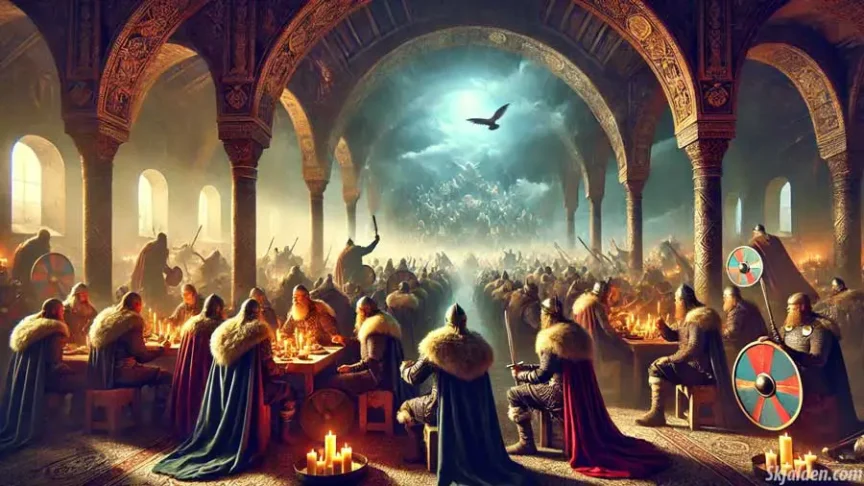
The einherjar are a legendary group of warrior spirits in Norse mythology. These elite fighters dwell in Valhalla, the grand hall of Odin, the chief of the gods. The term “einherjar” literally means “those who fight alone,” though their role in myths involves much more than solitary combat. They are central figures in the sagas and poems of Old Norse literature, representing ideals of bravery and valor.
The Life and Role of the Einherjar
The einherjar’s daily routine is the envy of any Viking warrior still alive. According to the myths, their days are spent in continuous battle, honing their skills and proving their courage. However, these battles are not marked by tragedy or permanent death. Each evening, any wounds the einherjar sustain are miraculously healed, restoring them to perfect health. This eternal cycle of conflict and renewal prepares them for their ultimate purpose.
At night, the hall of Valhalla transforms into a place of great feasting and camaraderie. The einherjar enjoys an endless bounty of food and drink, notably the meat from the boar Saehrimnir, who is resurrected daily, and mead from the goat Heidrun, which flows abundantly from her udder. These feasts are served by the Valkyries, beautiful maiden spirits who select those who may enter Valhalla.
While the lifestyle of the einherjar might seem focused on enjoyment, their existence serves a significant purpose. Odin has chosen each of the einherjar for their prowess and loyalty. Their primary role is to fight alongside Odin during Ragnarok, the prophesied end of the world where gods and giants clash in a final battle. Despite their strength and preparation, it is foretold that the einherjar, along with Odin and many other gods, will fall during this cataclysmic event.
The Symbolism of the Einherjar
The concept of the einherjar resonated deeply with Viking society. Warriors aspired to be chosen by the Valkyries to join this brave group after death, viewing it as a continuation of their honor and prowess beyond the mortal realm. The einherjar represented the warrior ideal, living in a state of perpetual readiness and festivity, reflecting the Vikings’ values of heroism and loyalty.
Interpretations of the Name
The name “einherjar” suggests individual combat, yet historical texts depict them fighting as a cohesive army. Scholars like Rudolf Simek suggest that the name could be derived from an older term meaning “those who belong to an army,” aligning more closely with their role in Norse mythology. This interpretation helps clarify the einherjar’s function as part of a collective force, despite the literal translation of their name.
The legend of the einherjar illuminates various aspects of Norse mythology, from concepts of the afterlife to ideals of martial prowess and honor. These warrior spirits not only prepare for the end of days but also celebrate the virtues that defined the best of Viking culture. Through tales of the einherjar, modern readers gain insight into how the Norse viewed bravery, battle, and the bonds of loyalty that extend beyond death.